
The Room Where Lincoln Waited
9/4/2026
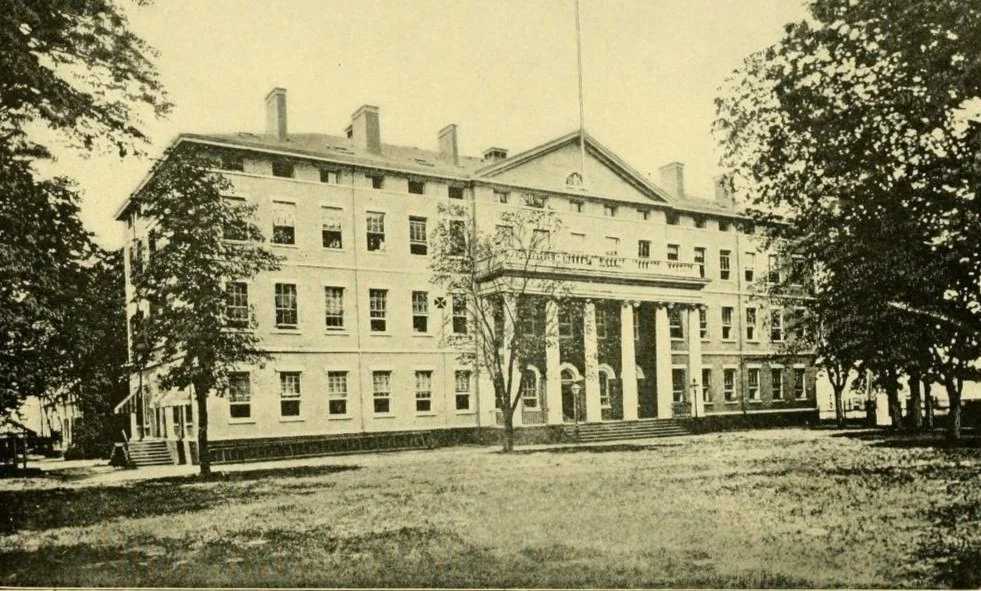
The Room Where Lincoln Waited
David Homer Bates and the War Department Telegraph Office, 1861–1866
The Night the Office Carried the Nation’s Grief
On the evening of April 14, 1865, David Homer Bates was working in the cipher room of the War Department Telegraph Office.
Only five days had passed since Robert E. Lee surrendered the Army of Northern Virginia. Richmond had fallen. Washington was illuminated in celebration, and the Union capital appeared to be emerging from four years of war.
Then someone rushed into the telegraph office with a report that President Abraham Lincoln had been shot.
At first, the news was uncertain. Rumors moved faster than verified information. Almost immediately, another report arrived: Secretary of State William H. Seward had also been attacked. Operators attempted to discover what had happened while officials hurried toward Ford’s Theatre and the house across the street where the wounded president had been carried.
Bates remained in the telegraph office with the other night operators. Thomas T. Eckert, the senior military telegraph official in Washington, joined Secretary of War Edwin M. Stanton at Lincoln’s bedside. Throughout the night, messengers carried Stanton’s bulletins from the Petersen House to the War Department, where the operators transmitted them to military authorities and the press.
At approximately 7:30 the following morning, the office learned that Lincoln was dead.
Bates and his colleagues had spent the night turning the tragedy unfolding across the street into the electrical messages by which officials and citizens across the country learned of the president’s condition and death.
The telegraph office had been close to Lincoln throughout the war. He had gone there after defeats, while battles remained undecided, when armies disappeared beyond the reach of the wire, and when victories finally arrived in terse electrical sentences. He sometimes visited several times in one day and occasionally remained through much of the night.
Bates had watched it happen.
His importance did not arise from commanding an army or shaping national policy. He was important because he occupied a place through which information passed. Messages from Grant, Sherman, Meade, Hooker, Burnside, McClellan, and other commanders arrived in the room where Bates worked. Orders from Lincoln and Stanton departed through the same instruments.
For four years, the War Department Telegraph Office became something the American government had never possessed before: a communications center from which a president could follow distant armies almost as events occurred.
David Homer Bates was one of the young civilians who made it function.
Four Young Operators
David Homer Bates was born in Steubenville, Ohio, on July 3, 1843, to Francis and Catherine Bates. While still a teenager, he moved to Altoona, Pennsylvania, and entered the telegraph service of the Pennsylvania Railroad’s Pittsburgh Division. That division was then supervised by a young railroad official named Andrew Carnegie.
On April 22, 1861, less than two weeks after the bombardment of Fort Sumter, Carnegie received an urgent request for experienced telegraphers who could be sent to Washington. He selected four young operators:
- Samuel M. Brown
- David Strouse
- Richard O’Brien
- David Homer Bates
They reached Washington on April 27.
Their arrival was preserved in a remarkable ambrotype showing the four operators together. Bates, seated near the center, looks strikingly young because he was: he would not turn eighteen until July.
The four were taken to the War Department and became part of the nucleus of the organization later commonly known as the United States Military Telegraph, or USMT. Bates remembered seeing President Lincoln, Secretary of War Simon Cameron, and General-in-Chief Winfield Scott during those first days in Washington—men whose decisions would soon depend heavily upon the network the young operators were helping create.
The USMT was not the Army Signal Corps.
Although its operators served military commanders and worked inside military headquarters, most remained civilian employees. The organization answered through the War Department rather than through the Army’s ordinary chain of command. A limited number of its senior administrators received military commissions, largely because commissioned officers were required to manage government funds and property, but men such as Bates were civilian technical specialists rather than enlisted soldiers.
That distinction did not make their work unimportant.
The four young men who arrived in April 1861 became part of a wartime service that eventually employed more than 1,000 operators, builders, repairmen, and administrators while maintaining thousands of miles of military telegraph line.
Before the War Department Office
Bates did not immediately settle into the office where he would become associated with Lincoln.
His first Washington assignment took him to the Navy Yard, where he worked under Commandant John A. Dahlgren. The capital remained tense and uncertain. Confederate sympathizers were believed to be operating within the city, transportation routes were threatened, and officials feared that Washington might be isolated or attacked.
Bates later remembered that security at the Navy Yard was so strict that he was effectively confined there for several days.
He was then sent to Annapolis Junction, Maryland, an important point on the rail and telegraph route connecting Washington with the North. After approximately two weeks, he returned to the capital.
With one significant exception—a brief assignment as a cipher operator at Ulysses S. Grant’s headquarters at City Point—Bates spent the remainder of the war in the War Department Telegraph Office. He continued there until August 1866, more than a year after the fighting ended.
His career was therefore almost the inverse of Jesse H. Bunnell’s.
Bunnell followed armies into the field, opened stations near battle lines, and moved as headquarters moved. Bates remained near the center. Messages from those field stations traveled toward him.
Where Bunnell’s work illustrates the dangerous outer edges of the Union network, Bates’s reveals what happened when the information reached Washington.
The Death of Ellsworth
One of Bates’s earliest encounters with Lincoln came on May 24, 1861.
That morning, Colonel Elmer E. Ellsworth led members of the 11th New York Infantry into Alexandria, Virginia. Ellsworth entered the Marshall House hotel and removed a large Confederate flag that had been visible from Washington.
As he descended the stairs, the hotel proprietor, James W. Jackson, shot and killed him. Private Francis Brownell immediately killed Jackson.
Ellsworth was only twenty-four years old and had been personally close to the Lincoln family.
The first verified telegraphic report of his death reached the War Department, where Bates received it and delivered it to the president. Bates later used the episode to mark the beginning of his wartime association with Lincoln.
The young operator who placed news of one of the Union’s first prominent deaths into Lincoln’s hands would still be in the office nearly four years later when news came that Lincoln himself had been shot.
The symmetry is striking, but it also shows the position Bates occupied. He was not merely maintaining machinery. He became a human point of contact between distant events and the national government.
Building the War Department Telegraph Office
The military telegraph office changed locations several times during the war.
In its final and most important arrangement, established in March 1862, it occupied the former War Department library on the second floor of the building. The room faced the street through five windows and stood adjacent to Secretary of War Edwin M. Stanton’s office.
Bookcases still occupied part of the old library. Telegraph instruments, batteries, desks, message forms, cipher books, and operators filled the remainder. A smaller adjoining room was assigned to the cipher operators.
Nearly all military telegrams entering or leaving Washington passed through this office.
Operators received incoming messages and transmitted outgoing traffic. Cipher operators translated sensitive dispatches into or out of coded form. Albert E. H. Johnson, the War Department’s custodian of military telegrams, filed the messages, many of which later became part of the documentary record used in compiling the Official Records of the War of the Rebellion.
Thomas T. Eckert exercised direct supervision over the office and eventually became one of Stanton’s closest technical subordinates. Charles A. Tinker, Albert B. Chandler, David Homer Bates, and several others handled cipher work.
As the volume of traffic expanded, the office normally employed approximately ten to twelve operators during the day and two or three at night.
In March 1862, when he was only eighteen years old, Bates succeeded Edward S. Wilson as manager of the office. His exact responsibilities evolved as the organization expanded, but he remained both a working operator and a trusted cipher clerk. He continued as manager until August 1866.
The youth of these men is easy to overlook.
The telegraph was a young technology, and telegraphy itself was often a young man’s profession. Speed, concentration, memory, hearing, and technical adaptability could matter more than age. A capable teenage operator might be entrusted with information that senior military officers were not permitted to see.
A President Without a Telegraph in the White House
The White House did not possess its own military telegraph office during the Civil War.
When Lincoln wanted immediate information, he crossed the grounds between the executive mansion and the War Department.
Bates remembered seeing him arrive in the morning, afternoon, or evening—sometimes more than once during the same day. Lincoln often crossed the lawn alone, occasionally wrapped in a gray shawl, entered the War Department, and climbed the stairs to the telegraph room.
During major campaigns, he might remain for hours or stay through much of the night.
The office was useful because it offered more than access to information. It also gave Lincoln a place to escape the crowds, petitions, office seekers, political delegations, and ceremonial demands that filled the White House.
Bates called it Lincoln’s “haven of rest.”
There, the president could sit with a small group of operators who did not require a speech, appointment, or political favor. He could read incoming dispatches, write questions to commanders, tell stories, discuss military developments, or simply wait.
Lincoln’s relationship with the operators was unusually informal.
They were young civilian employees, but they handled information that demanded absolute discretion. Their work placed them close to Lincoln without making them part of his political household. Bates believed that this combination—proximity without political ambition—allowed the operators to see a more relaxed and personal side of the president.
Not every story Bates later told should be accepted without qualification. His memoir appeared in 1907, more than forty years after Lincoln’s death. Memory, repetition, and the growth of Lincoln legend inevitably affected some recollections.
Yet Bates’s central claim—that Lincoln repeatedly used the War Department Telegraph Office as a wartime command room—is supported by surviving telegrams, the testimony of other operators, and the physical organization of the War Department itself.
The Operator as a Trusted Intermediary
A telegraph operator did not merely push a button and copy printed words.
Civil War telegraphy depended heavily upon human skill.
Operators listened to the clicks of a sounder and translated them into letters. They recognized other operators by their distinctive rhythm or “fist,” much as a person might recognize handwriting.
They adjusted circuits, located breaks, compensated for weak batteries, routed traffic through intermediate stations, and determined which messages required immediate attention.
At the War Department, operators also encountered information whose unauthorized disclosure could alter military operations.
A telegram announcing troop movements, naming an objective, or describing the weakness of a defensive position could be disastrous if intercepted. Important messages therefore passed through cipher operators such as Bates, Tinker, Chandler, and Eckert.
The principal War Department systems were transposition ciphers. Words were rearranged according to a changing key, while null or “blind” words were inserted to conceal the structure. The resulting telegram might appear to be meaningless prose or an unrelated collection of words.
At the receiving station, a trusted operator possessing the correct key reconstructed the original message.
The system was not simply a mechanical codebook. Its security depended upon controlling the keys and limiting knowledge to a small circle of trusted men.
Bates and William R. Plum later asserted that the principal USMT ciphers were never successfully read by the Confederacy and that no entrusted cipher operator betrayed the system. That sweeping postwar claim is difficult to prove absolutely, but there is no evidence that Confederate authorities routinely penetrated the highest-level War Department cipher traffic.
A surviving message dated July 15, 1863, demonstrates Bates’s direct involvement. The coded telegram was sent under the signature BATES to A. Harper Caldwell at Major General George G. Meade’s headquarters.
The message’s existence confirms that Bates was not merely standing near confidential traffic. He was personally encoding and routing strategic communications during the period immediately following Gettysburg.
Detecting a Stranger on the Wire
Bates’s memoir preserves an episode from the Fredericksburg campaign that illustrates the human dimension of telegraph security.
Operators working a military circuit became familiar with one another’s sending styles. Even when two men transmitted the same characters at the same speed, subtle differences in spacing, pressure, hesitation, and rhythm could identify the person at the key.
According to Bates, an operator on a military line detected transmissions sent in an unfamiliar style and suspected that someone had secretly attached an instrument to the circuit.
A search reportedly discovered a concealed connection made with fine, silk-covered magnet wire.
Bates described using misleading and deliberately garbled traffic while the regular cipher operator at Ambrose Burnside’s headquarters was absent. His account was written decades later, and some operational details cannot now be independently verified, but the incident captures an important reality: nineteenth-century communications security depended as much upon trained ears and professional familiarity as upon cipher systems.
The operator was therefore part technician, part clerk, part cryptographer, and part security officer.
Lincoln and the Emancipation Proclamation
The War Department Telegraph Office is also connected to the early drafting of the Emancipation Proclamation, although the story requires careful qualification.
Thomas T. Eckert later told Bates that Lincoln entered the cipher room during the summer of 1862, requested writing paper, and began drafting a document at Eckert’s desk.
According to Eckert’s recollection, Lincoln returned on subsequent occasions and continued working until the draft was substantially complete.
Bates published Eckert’s account in Lincoln in the Telegraph Office. Bates did not claim to have watched every stage himself; he was preserving the testimony of another telegraph official.
Moreover, Eckert related the episode decades after the event, and portions of his remembered chronology are imprecise. It should therefore be treated as a valuable recollection rather than as a stenographic record.
What is certain is that Lincoln prepared the preliminary Emancipation Proclamation during the summer of 1862 and presented it to his cabinet on July 22.
Eckert’s account is plausible because the cipher room provided exactly what Lincoln needed: privacy, paper, a desk, and freedom from White House interruptions. The room was adjacent to Stanton’s office yet removed from ordinary public traffic.
The significance is not that the telegraph operators helped write the proclamation. There is no evidence that they shaped its policy or language.
Rather, the story illustrates how deeply the telegraph office had entered Lincoln’s wartime routine. A room created to handle military communications had also become one of the places where he could think and write in relative seclusion.
Waiting for Gettysburg
The crisis of June and July 1863 shows the War Department Telegraph Office at its most important.
As the Army of Northern Virginia moved north, telegraph communication became uneven. Confederate movements threatened railroads and wires. Connections shifted as Union forces withdrew, advanced, or opened new headquarters.
At one point, Washington’s most useful connection toward the Army of the Potomac ran through Hagerstown. When that route failed, operators attempted to establish alternatives through Hanover Junction and stations along the turnpike.
The messages that reached Washington were incomplete and irregular.
Lincoln spent hours in the telegraph office waiting for fragments of information from Pennsylvania.
The contrast between modern expectations and Civil War reality is important. The telegraph made distant command astonishingly fast compared with mounted couriers or mail, but it did not provide continuous battlefield visibility.
Wires ended behind the armies. Dispatches still had to travel from the battlefield to an operating station. Lines were cut, overloaded, damaged, or abandoned. Reports might arrive hours after the events they described.
Lincoln could communicate faster than any previous American president, but he still spent long periods knowing that a battle was underway without knowing its result.
On July 4, Washington received encouraging confirmation that Meade had defeated Lee at Gettysburg. The news brought relief, but Lincoln quickly became concerned that the Army of the Potomac might allow Lee to escape across the Potomac River.
He continued using the telegraph to urge pursuit and obtain information about Meade’s movements.
Three days later, on July 7, the War Department received confirmation that Vicksburg had surrendered to Ulysses S. Grant on July 4.
The delay is revealing.
Vicksburg had fallen on the same day Washington celebrated Gettysburg, but the Mississippi campaign lay beyond a single uninterrupted telegraph connection. News had to move through a more complicated chain before reaching the capital.
Within the War Department office, the two great Union victories of July 1863 did not arrive as a single triumphant moment. They emerged in stages—partial reports, confirmations, questions, and further dispatches.
Bates witnessed victory not as a finished historical narrative but as information being assembled one telegram at a time.
The Limits of the Wire
The telegraph gave Lincoln unprecedented reach, but it could not eliminate geography.
When Grant crossed the Rapidan River and opened the Overland Campaign in May 1864, telegraph lines did not immediately follow him into the Wilderness. For nearly a week, Washington lacked the kind of direct communication it had enjoyed during campaigns conducted closer to established rail and telegraph routes.
The absence of information created intense anxiety.
The government knew that Grant and Lee were engaged in heavy fighting, but detailed reports arrived slowly. Newspaper correspondents, couriers, wounded men, and dispatch boats temporarily became as important as the wire.
The episode exposed a fundamental limitation of the Civil War telegraph.
It worked extraordinarily well between fixed stations and along secured routes. It was less certain when an army moved rapidly through hostile territory.
Once construction crews extended lines behind the army, the War Department again gained more immediate contact.
Bates briefly left Washington in June 1864 to serve for approximately two weeks as a cipher operator at Grant’s City Point headquarters. This appears to have been his only substantial wartime assignment away from the capital after his first weeks of service.
City Point became one of the most sophisticated military communications centers of the war. Telegraph lines connected Grant with the armies operating around Petersburg, while water and land connections linked his headquarters to Washington.
Bates’s temporary assignment placed him at the opposite end of the system he normally served. Instead of receiving the armies’ messages in the capital, he worked where strategic messages originated.
He nevertheless returned to the War Department, where his principal role remained.
A Contemporary Record
Bates’s later memoir is valuable, but an even stronger source survives: the diary he maintained from November 1863 through June 1865.
Unlike Lincoln in the Telegraph Office, written decades afterward, the diary records events as Bates experienced them.
It contains news arriving at the War Department, rumors circulating through Washington, military developments, celebrations, political reactions, and the daily rhythm of an office connected to several theaters of war.
The diary is an important record of military intelligence activity and of the telegraph’s developing importance in military command.
Its entries demonstrate that telegraph operators experienced the war differently from most civilians.
Battles and campaigns often appeared first as disconnected reports. Bates might record a rumor on one day, a partial confirmation on another, and the official result later.
This makes the diary more than a collection of facts. It shows how wartime information moved—and how uncertain even well-connected officials could remain.
Sherman Disappears
After capturing Atlanta in September 1864, William T. Sherman prepared to march across Georgia.
He deliberately severed his normal supply and communication lines, leaving the North without regular contact with his army.
For more than a month, Lincoln and the War Department possessed little dependable information about Sherman’s progress.
The silence was the opposite of everything the telegraph office had been built to provide. The operators could communicate with armies across enormous distances, but they could not reach an army that had intentionally marched beyond the network.
On December 22, a message finally arrived announcing that Savannah had fallen. Sherman presented the city to Lincoln as a Christmas gift.
Bates’s diary recorded the public reaction. On December 26, he wrote:
“This morning was ushered in with a booming of cannon.”
Washington celebrated with artillery salutes, fireworks, bells, and people firing pistols in the streets.
The episode helps explain the emotional power of the telegraph office. For more than a month, it had nothing certain to report.
Then a message arrived, and an entire city changed.
Richmond
By the spring of 1865, the telegraph network had followed the Union armies to the edge of victory.
On April 3, a cipher dispatch from Lincoln at City Point announced that Richmond and Petersburg had been evacuated. The president had traveled to Grant’s headquarters as the final operations unfolded and soon entered the fallen Confederate capital.
The message reached the same office from which Lincoln had spent four years waiting for news from Virginia.
For Bates, the arrival carried particular meaning.
He had received the report of Ellsworth’s death in May 1861, when Union control barely extended across the Potomac. Now the Confederate capital had fallen.
Lee surrendered to Grant at Appomattox on April 9. Washington erupted in celebration. Buildings were illuminated, crowds filled the streets, and the War Department received a flood of congratulatory traffic.
Five nights later, Bates was again in the cipher room when the war’s celebration gave way to assassination.
The Assassination and the Telegraph
The attack on Lincoln made the War Department Telegraph Office part of a different kind of national emergency.
After the first reports arrived, officials initially feared that the attacks on Lincoln and Seward might be part of a wider attempt to destroy the federal government. Vice President Andrew Johnson, General Grant, Stanton, and other officials might also be targets.
Washington’s military authorities had to secure bridges, roads, railroads, and telegraph lines while beginning a search for the assassins.
Stanton established himself at the Petersen House, where Lincoln lay unconscious. From there, he directed the investigation and dictated official bulletins.
Messengers carried those bulletins across the street and through the War Department to the telegraph office.
Bates and the night operators transmitted information to Major General John A. Dix in New York and to the press. The telegraph that had carried wartime orders now carried reports of the president’s failing condition.
Bates did not embellish his immediate role by claiming special access to Lincoln’s deathbed.
He remained where his duty placed him: in the office, maintaining the communications system while senior officials moved between the theatre, the Petersen House, and the War Department.
That restraint makes his account especially useful. He recorded what the operators knew, when they knew it, and how information moved outward.
Lincoln died at 7:22 on the morning of April 15. Bates recalled that the telegraph office received confirmation only minutes later.
The president who had spent so many hours waiting beside its instruments would never enter the room again.
What Bates Actually Saw
Bates’s proximity to Lincoln made his later memoir valuable, but it also requires historical discipline.
He saw Lincoln frequently. He received messages from him, delivered messages to him, observed him waiting for military news, and worked in a room the president regularly used.
Bates could therefore describe Lincoln’s habits in the telegraph office with genuine firsthand authority.
He could not personally witness every battlefield event described in his book. For those, he relied upon dispatches, documents, published histories, and accounts supplied by other operators.
Several important portions of Lincoln in the Telegraph Office are explicitly the recollections of Thomas Eckert, Charles Tinker, Albert Chandler, Samuel Beckwith, or other USMT veterans. Those accounts remain useful, but they should not all be described as things Bates personally witnessed.
His description of Lincoln drafting the Emancipation Proclamation in the cipher room, for example, derives chiefly from Eckert’s later testimony. Some famous Lincoln anecdotes in the book similarly came from colleagues.
Bates also wrote in an era when Lincoln had become a national martyr. His admiration is unmistakable, and some conversations are reconstructed with greater precision than human memory normally retains after forty years.
The answer is not to reject Bates. It is to read him in layers:
- His wartime diary provides contemporary evidence.
- Surviving telegrams and official records confirm his position and work.
- His firsthand office recollections describe events he personally observed.
- Stories attributed to other operators preserve valuable but secondhand testimony.
- His broader interpretations of Lincoln reflect both memory and postwar admiration.
Used with those distinctions, Bates remains one of the most important witnesses to Lincoln’s wartime presidency.
After the War
Bates remained manager of the War Department Telegraph Office until August 1866.
In 1867, he married Sallie J. Raphael Kenney. He then spent approximately twenty-five years with Western Union, eventually becoming a vice president while again working under Thomas T. Eckert.
His postwar career reflected the continuity between the wartime military network and the expanding commercial telegraph industry.
In 1907, he published Lincoln in the Telegraph Office: Recollections of the United States Military Telegraph Corps During the Civil War.
The book combined personal memory, documents, stories from other operators, and an account of how the USMT supported the Union war effort.
Bates died in 1926.
He had completed another manuscript, subsequently published as Lincoln Stories Told by Him in the Military Office in the War Department During the Civil War.
His papers—including correspondence, manuscripts, photographs, Lincoln documents, and his wartime diary—eventually became part of the Library of Congress.
A surviving individual portrait of Bates was made in Washington by Philp & Solomons on November 16, 1865.
Unlike the uncertain image situation surrounding some lesser-known USMT operators, this photograph is securely identified and preserved by the Library of Congress. It shows Bates at twenty-two years old, near the conclusion of his War Department service.
<!-- Suggested portrait: David Homer Bates, photographed by Philp & Solomons, November 16, 1865. Library of Congress: https://www.loc.gov/item/2011647937/ -->The Man in the Middle
David Homer Bates did not string wire under fire at Gaines’ Mill.
He did not open an office on a stump at Chickamauga.
He did not follow a corps headquarters through the mud of an active battlefield.
His war was fought in a crowded upstairs room in Washington.
That room stood between the president and the armies.
Field operators transmitted reports toward it. Cipher clerks transformed apparently meaningless groups of words back into military orders. Messengers carried completed copies into Stanton’s office or placed them before Lincoln.
Replies traveled back through the same desks, instruments, wires, relay stations, construction crews, and operators.
Bates stood in the middle of that system.
He delivered the news of Ellsworth’s death in 1861. He watched Lincoln wait through Gettysburg. He helped handle confidential traffic as Grant and Sherman conducted coordinated campaigns. His diary recorded the silence surrounding Sherman’s March to the Sea and the celebration when Savannah fell.
He remained in the cipher room while Stanton’s bulletins carried news of Lincoln’s assassination across the country.
His greatest historical contribution came later.
Many telegraph operators remembered Lincoln, but Bates systematically preserved what he and his colleagues had seen. Because he kept a diary, retained documents, gathered testimony, and wrote his memoir, the War Department Telegraph Office did not disappear entirely into the background of Civil War history.
The telegraph gave Lincoln something no previous commander in chief had possessed: the ability to communicate with armies hundreds of miles away within minutes.
But the instrument never operated by itself.
Between Lincoln and the generals stood young civilians who received the signals, recognized the sender, guarded the cipher, copied the words, and placed the message into the president’s hands.
David Homer Bates was one of them.
And for four years, he worked in the room where Lincoln waited.
Sources
Primary Sources
-
Bates, David Homer. Lincoln in the Telegraph Office: Recollections of the United States Military Telegraph Corps During the Civil War. New York: The Century Company, 1907. Internet Archive edition
-
Bates, David Homer. “Diary and Daily Journal, November 1863–June 1865.” Alfred Whital Stern Collection of Lincolniana, Library of Congress. View the digitized diary
-
David Homer Bates Papers, 1837–1926. Manuscript Division, Library of Congress. Collection finding aid
-
Lincoln, Abraham. Preliminary Emancipation Proclamation manuscript, July 22, 1862. Abraham Lincoln Papers, Library of Congress. Abraham Lincoln and Emancipation
-
Plum, William R. The Military Telegraph During the Civil War in the United States. 2 vols. Chicago: Jansen, McClurg & Company, 1882. Volume I Volume II
Archival and Institutional Sources
-
Library of Congress. “David Homer Bates.” The Civil War in America. View the biography
-
Library of Congress Prints and Photographs Division. “D. H. Bates.” Photographed by Philp & Solomons, November 16, 1865. View the portrait
-
Library of Congress Prints and Photographs Division. Portrait of Samuel M. Brown, David Strouse, David Homer Bates, and Richard O’Brien, April 27, 1861. View the ambrotype
-
Library of Congress. “November 1863–April 1865.” The Civil War in America. View the exhibition section
-
Raines, Rebecca Robbins. Getting the Message Through: A Branch History of the U.S. Army Signal Corps. Washington, D.C.: Center of Military History, United States Army, 1996. Read the official Army history
Additional Reading
-
Bates, David Homer. Lincoln Stories Told by Him in the Military Office in the War Department During the Civil War. New York: William Edwin Rudge, 1926.
-
Wires, Richard. Lincoln’s Last Days: The Shocking Assassination That Changed America Forever. Useful for broader context surrounding the War Department and the assassination investigation.
-
Wheeler, Tom. Mr. Lincoln’s T-Mails: How Abraham Lincoln Used the Telegraph to Win the Civil War. New York: HarperCollins, 2006. A modern study of Lincoln’s use of telegraphic command.